Friday, April 22, 2005


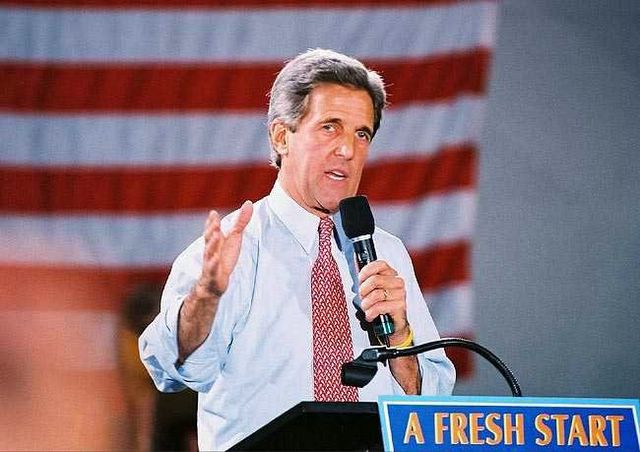
it seemed like a good idea Posted by Hello
Quotes of the Week

"I wish I had a subscription to Time Magazine so I could cancel it."
---post on the Center for American Progress blog, concerning Time's fawning and dishonest cover story on Ann Coulter.

"Anything that is complex narrative storytelling---one-hour dramas, narrative miniseries, character-driven movies for television---advertisers don't believe there is an audience under fifty for these kinds of shows."
---Susan Lyne, former president of ABC Entertainment
quoted by Ken Auletta in the New Yorker 3/28/05
(okay, so that wasn't this week, but I read it this week.)

and I believe in global warming...research, that is. Posted by Hello

Thursday, April 21, 2005

In Other New...

Pope John at Blue Voice. "We've Had 35 Years of Earth Days and the World is Still a Mess" at Books In Heat.

Wednesday, April 20, 2005

White Smoke for the Red States

Congratulations, fundamentalist evangelical protestants and neocons, you've got yourself a pope! He's the guy who advised U.S. Bishops to deny sacraments to the likes of John Kerry, and warned U.S. voters that a vote for the likes of Kerry could send them to hell, and he did so during the 2004 campaign. Oddly enough, the margin for Bush in Catholic votes made the difference, if you have that kind of faith in the integrity of the voting process in 04.

That he's one of the few remaining veterans of the Nazi Youth has to be considered just a little bonus.

Yahoo! News - New pope intervened against Kerry in US 2004 election campaign

Tuesday, April 19, 2005

And in Other New...

Not for Boys Only at Soul of Star Trek.
Black Smoke for Bolton

Sorry, we do not have a UN Ambassador.

"But do I think John Bolton would make a good ambassador to the United Nations? Absolutely not.He is incapable of listening to people and taking into account their views. He would be an abysmal ambassador."
Lawrence Wilkerson, chief of staff to Secretary of State Colin Powell


The New York Times > Washington > Delay Is Sought in Vote on U.N. Nominee

(Oh boy, what's Delay done this time...)

Sunday, April 17, 2005

In Other New...

The Bomb at Books in Heat

Thursday, April 14, 2005


Still a good idea Posted by Hello
Kerry On

Despite receiving more votes for President than anyone in history except perhaps for G.W. Bush, John Kerry apparently was not significant enough to be named among Time Magazine's 100 most influential Americans.

Perhaps that's why a claim that he had made a single speech that may have violated campaign laws was immediately investigated, while a prior claim that Condi Rice (undoubtedly one of the 100) had made a whole string of political speeches late in the Bush campaign, unprecedented for a National Security Advisor, all paid for by taxpayers, was not investigated by the supposedly nonpartisan government panel, which incidentially is under fire for dumping professionals and promoting GOPer partisans. Whatever the reason, Senator John Conyers wants to find out.

Meanwhile, Kerry's outrageous charge that the Bushies had Osama bin Laden cornered at Tora Bora in 2001 but lost him when they "outsourced" the job to Afghan warlords, has been supported by a German intelligence official, who says that bin Laden escaped by bribing the Afhghans.

FRIDAY UPDATE: We might also mention that while a soldier in Iraq was killed recently because his post didn't have sufficient sand bags---yes, sand bag shortages--Senator Kerry got a couple of bills passed through the GOPer Congress increasing benefits for soliders and their families at home.

And while we're more or less channeling 11/04, allow us to announce that from election day to this day, here are the number of hours we have spent watching or reading the following:
Fox News 0
MSNBC 0
CNN 0
Time Magazine 0
network news 0
Wall St Journal 0
"reality shows" on network, cable or Mr. In Between: 0
[margin of error = + or- 0.1]

Monday, April 11, 2005

Bushcrash

Though largely unreported in American media, TV viewers witnessed the image of GW Bush on big monitors in St. Peters square evoking boos and whistles at the Pope's funeral. Bill Clinton, however, was cheered wherever he went, and had to cut short a walk because he was being mobbed by enthusiastic Italians.

But that's nothing to what's happening back in America. In their study of the major polls, the Democracy Corps ( Democratic consultants Stan Greenberg, James Carville and Robert Shrum) issued a dramatic report, showing Bush with 50% disapproval for the first time, and across the board numbers on his performance below 40% approval. Here's Karl Agne's opening paragraph:
"While media coverage has been saturated over the past few weeks with the tragic case of Terri Schiavo and the death and burial of Pope John Paul II, American politics has not stood still. Public polling released over the last two weeks show unmistakable movement on a number of fronts, and the news is almost uniformly bad for the White House and Republicans in Congress.

After a series of mixed results in mid-March, it is now clear that George W. Bush has reached
the lowest point of his presidency on fundamental measures including overall job approval,
personal favorability, and his handling of the two issues that have dominated his time in office – Iraq and the economy."

Perhaps most worrisome to the White House is the quick drop in the consumer comfort index, the sharpest plunge in a two week period ever recorded.

Meanwhile, the rabid right has been aggressively attacking the judiciary, with some issuing less than veiled threats of physical harm. And while Senator Rick Santorum, about to face a tough reeelection campaign in PA, was piously attending a prayer vigil for Terri Schaivo in Florida, he nevertheless managed to collect $250,000 there for his campaign.


In other new...

"Much Ado About Few" at Books in Heat. "The Mall is a Place" at Shopopolis. "Sharks and Whales" at Soul of Star Trek. "DVD Bonus" at Blue Voice.

Friday, April 08, 2005


revenge of the sun Posted by Hello
Science Lessons of 1940!

In just the first 20 pages of Gerard J. DeGroot's fascinating new history of The Bomb (Harvard U. Press), the twists and turns in the path leading to the U.S. creating the first atomic weapon, provide at least three lasting lessons.

The background is that in the mid-1930s, few physicists had even thought about an atomic bomb, or if they had, believed one was possible; or if they believed it was theoretically possible, that it could be made a practical reality. But between 1938 and the autumn of 1941, the bomb went from a little known or believed theoretical possibility to a massive research and development program in the U.S., and lesser but still significant programs in Germany and the USSR.

1. Suicide by Prejudice

The first is pretty well known: though Germany eventually mounted a credible program, Hitler subverted his own efforts in 1933 by directing that non-Aryans be fired from civil service jobs, which included universities and scientific institutes. Eleven physicists who had won or would win Nobel Prizes were dismissed. Around 100 German physicists, most of them Jews, wound up in the U.S. by 1941. They not only provided the scientific talent but a lot of the motivation for the U.S. bomb program.

Hitler and his minions attacked physics as "Jew science." The prejudice was racial but also religious. Today in America there is no need to put Jew in front of science. With few if any exceptions, science is seen as not supporting fundamentalist Christian beliefs and often runs counter to them. It's not racial, strictly speaking, but there is a component. We have Hitler's prejudices, supported by and energizing an ideology that was political and even in some sense religious, to partly thank for Germany's failure to build and use the atomic bomb in World War II. But such prejudices now, supporting other ideologies and plain old greed, endanger the world even more profoundly. Hitler could have dominated the western world, for awhile. But the climate crisis could destroy this planet's capacity to sustain human civilization, and perhaps human and other life as we know it.

2. Even science is hampered by prejudice.

Enrico Fermi (an Italian with a Jewish wife who would flee Italy for the U.S. because of anti-Semitism imported by Mussolini's German ally) got some puzzling results by bombarding elements with neutrons in 1933. Physics was a small global club, with information still freely shared across all borders. For awhile no one could explain Fermi's results, until Ida Noddack, a woman physicist in Germany, came up with an unorthodox interpretation in 1934 that turned out to be the key to nuclear power. She saw the possibility of nuclear fission.

Everyone ignored her. Hitler and his scientists ignored her, or else (DeGroot speculates) they might have embarked on a bomb program early enough to build some before war's end. But other physicists everywhere else also ignored her, because, DeGroot says, she was a woman, and did not have the reputation of some other physicists, whose ideas were immediately taken seriously.

Simon Singh's new book, The Big Bang, also reveals the contributions of women in physics and astronomy through the years, though they didn't get much credit. In this case, the prejudice against women moved them lower on the pecking order within physics. As much as scientists like to promote themselves as beyond such considerations, they aren't. Sometimes one generation has to die off, Singh says, before the insights of the next generation are accepted.

The lesson for us is not to project too much; the sins we see in others might be in ourselves as well. Humility is always in order, as is self-examination, even for the "reality-based."


3. Before it can be done, it must be imagined.

It wasn't until 1938 that somebody else-Fermi himself, still in Italy then---came to the same conclusion as Noddack. Fermi's work was immediately published, partly through the efforts of a man who was a British agent, who wanted to make sure the information got out before Germany clamped down on publication. At this point, free exchange of information was useful to the Allies. But nobody yet really grasped what all of these theories and experiments really might mean. Except Leo Szilard. And he figured it out, including what must be done, because years before he had read a science fiction novel by H.G. Wells.

In 1914, Wells published The World Set Free, which dramatized a war carried out with atomic bombs. He invented the term "atomic bomb" in that novel. He got a lot of other things right about the science as well, including the nature of what would be called Plutonium, which even in 1938 hadn't been discovered.

Szilard not only remembered the bomb, but also the war, and how it happened. He realized, from his reading of Wells, that if knowledge of fission and the bomb got out, it could mean the end of civilization.

Szilard won the Nobel Prize in 1938, and after picking up the award in Sweden, he and his wife emigrated to America. In addition to his own researches, Szilard was instrumental in first, getting U.S. and British physicists to stop publishing anything about fission, and then getting Albert Einstein to write that famous letter to FDR, and to enlist other influential people in convincing the U.S. government to develop the bomb before Hitler did.

Ironically, one of the problems the physicists had in convincing U.S. government and military officials was that the whole idea smacked of science fiction to them. It took a few key people to explain the possibilities and the need in plain English before FDR gave the word. Szilard, Fermi and others who worked on the bomb didn't believe it should ever be used, if Hitler didn't develop one. Because Szilard at least had already seen the consequences, in a novel written a generation earlier.

In the whole history of The Bomb, the public was told all sorts of contradictory things by officials, politicians and scientists. The public perception was most affected, first by photographs from Hiroshima, but later by fiction and movies, like Dr. Strangelove, and The Day After.

The science lesson for us now is that we need to imagine the era we're entering of global effects of the climate crisis. Early attempts, like the movie The Day After Tomorrow, had some effect, and will be looked at again. The powerful imagining of this future that really motivates people has yet to be seen or heard. Yet it may start with a few, like Szilard, who have read or seen or imagined the story of things to come.

While we're here, let's add a fourth lesson. While we're aware of the moral complexities involved, especially given the lack of real information about what each country was doing and what making a bomb would actually entail, there is a lesson in why each of these programs got started.

Politicans and military people had their frameworks for war, and nuclear pipedreams didn't fit into it, to the point where they couldn't understand it. In each case, as DeGroot demonstrated, it took an act of good communication to get things moving.

In particular he contrasts the muddled presentations and even the less than clear Einstein letter of those advocating the American program, with the clear, one paragraph presented to Hitler (so Germany started before the U.S.)

What convinced FDR was not Einstein's letter but a story, a metaphor. Alexander Sachs was an international financier and friend of Einstein. He got it. He was the one who got the letter to FDR. But it was his meeting with FDR the next day that convinced him. He simply told FDR a story about a young American inventor who went to Napoleon during wartime and offered his invention, which the emperor turned down. The inventor was James Watt, the invention the steam engine. This got Roosevelt's attention.

The lessons for our time are that clarity is essential, and metaphor is helpful, and communication is the key to turning good science into good policy. Not the only prerequisite, of course, but one we can do something about.

Wednesday, April 06, 2005

In Other New...

How I Solve Crimes at Blue Voice. Star Trek and the Culture Wars at Soul of Star Trek.

Monday, April 04, 2005

Hello California!

Californians within the sound of our blog take heed: hearings on the universal health care bill in the state Senate are coming up. Senator Kuehl, the author and sponsor, is soliciting letters of support, with the help of the ACLU. Go to the website below and add your voice:

Tell-A-Friend: Support Comprehensive Health Care Reform

Saturday, April 02, 2005

Iraqnam: ready for its Tet?

While attempts to form an actual government in Iraqnam founder, insurgents acted like a real army in attacking Abu Ghraib prison from several directions and with coordinated tactics. Although taken by surprise, U.S. called in the Marines to secure the area, ending 40 minutes or so of fighting. The Washington Post reports 18 U.S. wounded, the Times reports 20.

While not as dramatic or effective as the Tet offensive in Vietnam, this does indicate that the so-called insurgency is still strong, and may be getting stronger.

More U.S. military are speaking out against the Rumsfeld led war plan. And as the world mourns the death of the Pope, we wonder how many Catholics---particularly American Catholics---remember that this Pope spoke out strongly against this war, early and often.

Insurgent Attack on Abu Ghraib Wounds 18 U.S. Soldiers (washingtonpost.com)

Friday, April 01, 2005


This just in! Proof that evolution is false! Posted by Hello

Wednesday, March 30, 2005

Why you won't be so worried about gas prices

A UN report that inventories the earth and finds that two-thirds of the systems that keep the planet alive are failing, is getting all kinds of headlines, and we do mean all kinds. Take a look at the Google News list and see what we mean. Because it's all in the interpretation.

One of the more ominious interpretations feeds into our previous warning about how the Corporate Right could coopt the climate crisis: the forecasted shortage of water. While it's certainly true that the costs of natural resources haven't been taken into account adequately, and it's true that the water most of us get for free isn't really cost-free, the interpretation of this could very well lead to the world's water going to the highest bidder.

Of course most of us in the U.S. pay for our drinking water already, out of bottles or from filters. But even though $3 a gallon gasoline prices are coming soon to your American neighborhood, how would you feel about $10 a gallon water?

As for our Canadian friends, I'd think again about missile defense. You may need it to protect your water reserves. Just make sure the damn things are aimed at the U.S.

Here's a summary from the Guardian (thanks to cuz Lemuel) and another:
Sci-Tech Today - Science - Abuse of Ecosystem Threatens Earth
In other new...

Two books on the mystic chords of memory at Books in Heat.

Essay on the film, Star Trek III: The Search for Spock at Soul of Star Trek.